2026-10-08
Hongdae Dermatology: Can Pigmentation Be Treated with Pico Toning Alone?
Pico toning helps with widespread pigmentation, but melasma, nevi, freckles, and redness often need different approaches. Here's how Nine Clinic Hongdae plans pigmentation treatment.
Hello,
This is Dr. Lee Go-eun, director of Nine Clinic Hongdae.

“I have a lot of spots. Is Pico Toning alone enough?”
“I have both melasma and nevi. Can they be treated with the same laser?”
These days, when you search for pigmentation treatment,
the name Pico Toning comes up so often
that many people end up thinking of pigmentation treatment as pretty much the same as Pico Toning.
In actual clinical practice, though, we take a slightly different approach.
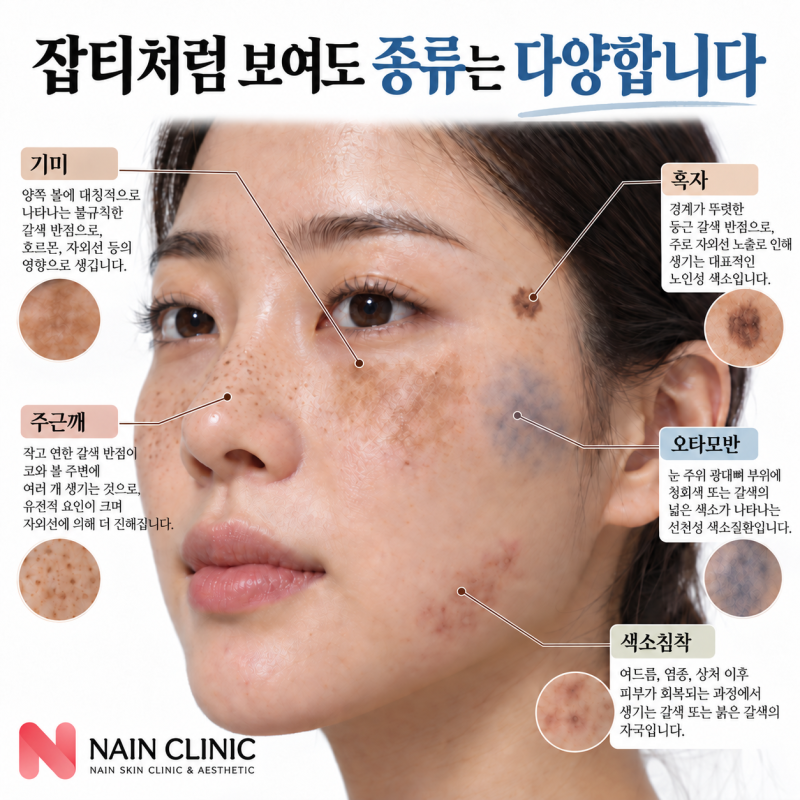
What we often call “spots” when we look in the mirror
can actually include different types of pigmentation,
such as melasma, nevi, freckles, Ota nevus, and post-inflammatory hyperpigmentation.
Even when they look the same shade of brown,
they are not all the same type of pigment,
and in some faces, melasma and nevi appear together.
That's why, before deciding which laser to use,
it's important to first look at which pigments are present in the skin.
Today, I'd like to talk about pigmentation treatment,
focusing on some of the most common misconceptions.
Having many spots doesn't mean they all get the same treatment
When someone tells me, “My face has way too many spots,”
a closer look at their skin often reveals several different issues mixed together.
Melasma may be spread widely across the cheekbones,
with nevi visible in between,
and freckles may be scattered across the nose or cheeks.
In areas where acne once was,
brown or red marks may remain as well.
To the patient, it all looks like “spots” that make the skin look uneven,
but as the treating doctor, we need to assess each one separately.
For example,
melasma doesn't usually look like a single spot,
but more often spreads widely and irregularly across the cheeks or forehead.
By contrast, solar lentigo
usually appears as distinct, individual brown spots that stand out from the surrounding skin.
So we don't simply use a stronger laser because a spot looks darker,
or repeat the same treatment just because there are lots of spots.
Will all pigmentation disappear if I keep getting Pico Toning?
Pico Toning is also a commonly used method in pigmentation treatment.
It can be used to manage pigmentation spread across the face or to improve overall skin tone,
depending on the condition of the skin.
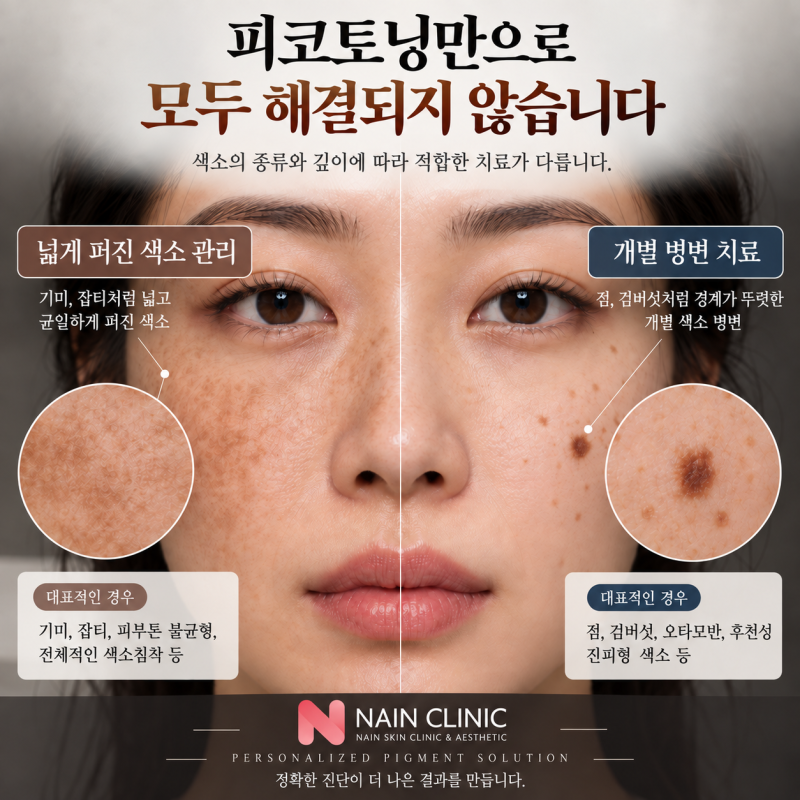
However, repeating Pico Toning doesn't mean
that all the pigmentation on the face will improve in the same way.
Managing widespread pigmentation such as melasma
and treating distinct, individual lesions like nevi or age spots
may require different approaches.
The same applies to pigments that differ in location and characteristics,
such as freckles or Ota nevus.
That's why some patients who have been getting toning consistently say,
“My overall skin tone has improved, but why is this spot still there?”
In situations like this, rather than simply increasing the number of toning sessions,
it may be necessary to re-check what type of pigment the remaining spot was from the start.
It's not just about brown pigmentation
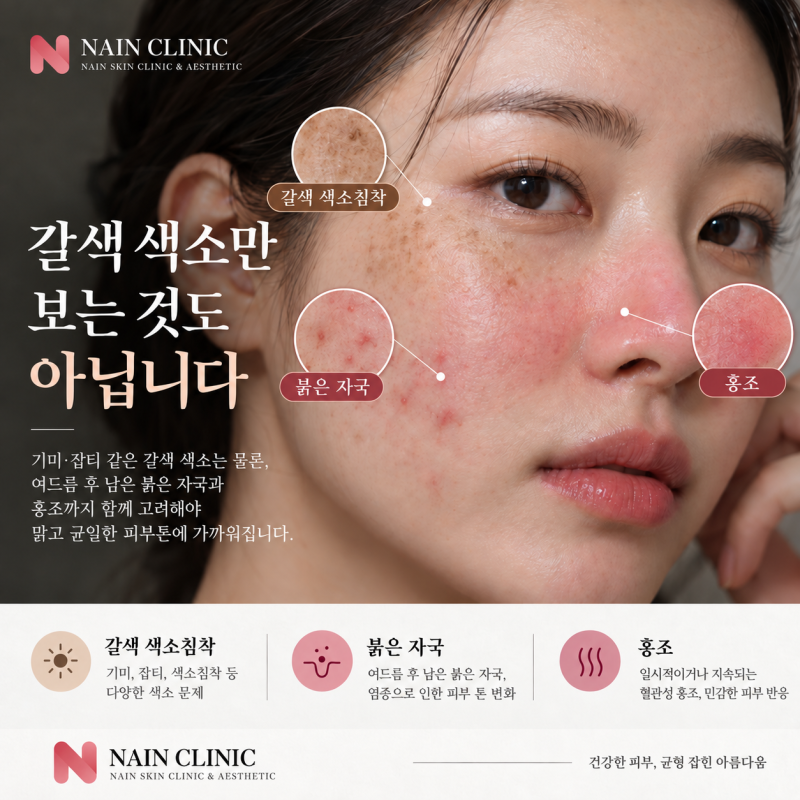
Many people who come in with pigmentation concerns
often have more than just brown marks.
Redness may be visible between the spots,
or in areas where acne has healed, brown pigmentation and red marks
may remain at the same time.
To patients, these may all look like “marks,”
but during treatment, brown pigmentation and redness need to be assessed separately.
In cases like this, we may include lasers such as Excel V in the treatment plan,
which can address vascular concerns like redness or post-acne red marks.
Ultimately, even within the single concern of uneven-looking skin, the underlying causes can be many.
That's why it's important to determine whether only the pigmentation needs treatment,
or whether the redness should be managed as well.
Why is more than one laser needed for pigmentation treatment?
There's a reason why several types of lasers exist for pigmentation treatment.
Each pigment differs in location, shape, and depth,
and the treatment targets vary as well.
For example,
distinct lesions such as nevi or age spots may be treated with a method
that selectively targets that pigment, such as Ripot Laser.
For pigments such as freckles, spots, or Ota nevus,
a ruby laser such as The Ruby Q can be used depending on the condition of the skin.
On the other hand, for spots spread widely across the face,
rather than removing one or two lesions,
when the goal is to consistently manage pigmentation across the whole face,
toning methods such as Pico Toning or VRM Toning may be considered.
In short, the way nevi are treated, the way melasma is managed,
and the way freckles or Ota nevus are treated are not always the same.
That's why each laser has a different role.
That said, this doesn't mean you need to undergo many different lasers at once
to get better results.
What matters more is
first identifying which concerns are present in your skin right now.
Whether melasma is the main concern,
whether there are nevi or age spots that need separate treatment,
whether freckles or spots are also present,
whether there is pigment at a different depth, such as Ota nevus,
and whether redness or red marks are also present.
After reviewing each of these,
choosing and applying the necessary treatments is the important step.
Sometimes several concerns can be treated at the same time,
but depending on the skin's condition, treatments may be divided into stages,
or one concern may be treated first and the progress monitored before moving on.
So what I mean by “comprehensive pigmentation treatment”
isn't about using many lasers,
but about distinguishing the various concerns present in a person's skin
and choosing the right approach for each one.
Where Nine Clinic Hongdae believes pigmentation treatment begins
Nine Clinic Hongdae has
a range of equipment that can be used for pigmentation treatment,
including Ripot Laser, The Ruby Q, Revlite, VRM, and Excel V.
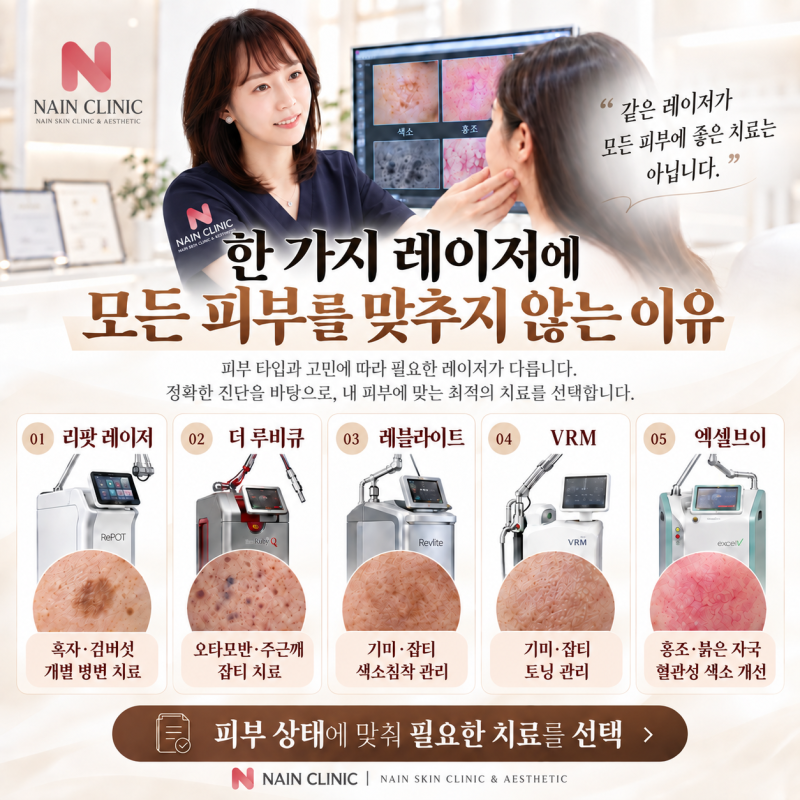
However, for me, the number of devices itself
is less important than having a range of options.
Rather than treating every skin type with one laser,
we look at the types and distribution of pigment visible on the skin, whether redness is present, and so on,
so we can choose the right treatment.
In actual consultations,
we first check the shape and distribution of the pigment with the naked eye,
and may also refer to Mark View imaging to review the pattern of the pigmentation.
Afterward, we plan which pigment to treat first and how.
Ultimately, choosing a laser is the step that comes after diagnosis.
How many sessions does pigmentation treatment take?
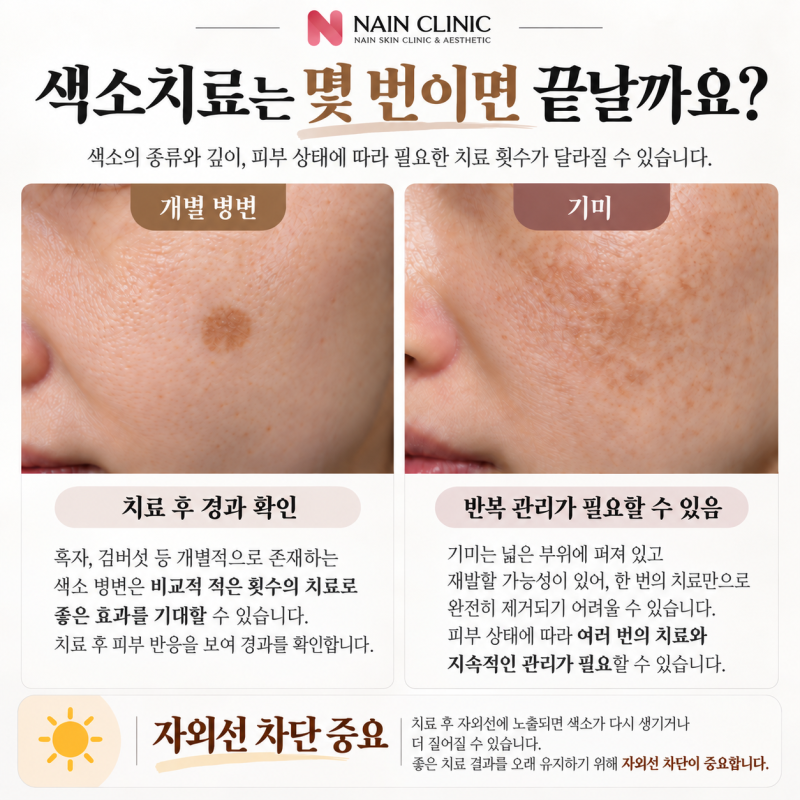
This also depends on the type of pigmentation.
Individual lesions such as nevi can be approached by treating the area
and then checking the progress,
whereas pigmentation influenced by multiple factors, such as melasma,
may need ongoing maintenance.
In particular, melasma can be influenced by UV exposure and lifestyle factors,
so along with treatment, consistent sun protection is also important.
That's why, in pigmentation treatment,
rather than asking “How many sessions will it take?”,
it's better to first ask “What pigment are we treating?”
Final Thoughts
“Isn't pigmentation treatment just about getting Pico Toning?”
If I had to sum up today's article in one sentence,
Pico Toning is an important method used in pigmentation treatment,
but not all pigmentation can be treated with just one laser.
Widespread pigmentation like melasma,
individually visible pigmentation like nevi or age spots,
and pigmentation with different characteristics such as freckles or Ota nevus
may each require different treatment approaches.
If redness or post-acne red marks are also present,
the redness may need to be evaluated along with the pigmentation.
So if you're looking into pigmentation treatment at a Hongdae dermatology clinic,
instead of first wondering which laser is best,
I'd encourage you to first ask yourself,
“What pigmentation and skin concerns are present on my face right now?”
Once those have been thoroughly examined,
choosing the right treatment for each concern
is, in my view, where pigmentation treatment begins.
Thank you for reading this long post.

“We want you to become more beautiful every single moment.”
Nine Clinic Hongdae
This was Lee Go-eun.


By the way, did you know
that we also have a YouTube channel?
We share short, helpful information about a variety of procedures,
so please stop by and take a look 😊

#HongdaeDermatology #HongikUnivDermatology #HongdaePigmentationTreatment #HongdaePicoToning #HongdaeMelasmaTreatment #HongdaeSpotTreatment #HongdaeNevusTreatment #HongdaeFreckleTreatment #PicoToning #PigmentationTreatment #MelasmaTreatment #NevusRemoval #FreckleTreatment #OtaNevusTreatment #RipotLaser #TheRubyQ #RevliteToning #VRMToning #ExcelV #NineClinicHongdae
Frequently Asked Questions
Will Pico Toning alone make all pigmentation disappear?
No. Repeating Pico Toning does not mean that all pigmentation on the face will improve in the same way. Distinct lesions such as nevi or age spots may require a different approach.
Why are there several types of lasers for pigmentation treatment?
Each pigment differs in location, shape, and depth, and the treatment targets vary as well, which is why several types of lasers exist. For example, depending on skin condition, Ripot Laser may be considered for nevi or age spots, and The Ruby Q for freckles or Ota nevus.
Which types of pigmentation is Pico Toning used for?
Depending on skin condition, Pico Toning can be used to manage widespread pigmentation across the face or to improve skin tone. It is a commonly used method in pigmentation treatment, but pigments with different locations and characteristics, such as nevi or freckles, may require different treatment approaches.
How many sessions does pigmentation treatment take?
The number of sessions depends on the type of pigmentation. Individual lesions such as nevi can be approached by treating and then checking progress, while melasma, which can be affected by UV exposure and lifestyle factors, may require ongoing maintenance.
Is redness also evaluated during pigmentation treatment?
Yes. If redness or post-acne red marks are present alongside pigmentation, the redness can be evaluated along with the pigmentation. In such cases, lasers like Excel V, which can address vascular concerns, may be included in the treatment plan.
What is checked before pigmentation treatment?
The shape and distribution of the pigment are checked directly with the naked eye, and Mark View imaging may also be referenced. After that, we plan which pigment to treat first and how.