2026-10-21
Hongdae Dermatology Pigment Laser: What Is Revlight Toning?
This article explains how Revlight toning works, how it differs from regular laser toning, which pigments it treats, how many sessions are typical, and aftercare tips.
Hello,
This is Dr. Lee Go-eun from Nine Clinic Hongdae.
When I consult patients about melasma and other pigment treatments at our Hongdae dermatology clinic, many of them ask me:
“Is Revlight toning different from regular laser toning?”
“How does treatment work for melasma?”
Today, I'll explain the principles and features of Revlight toning, one of the pigment lasers, and which types of pigmentation it is mainly used for.
What kind of pigment laser is Revlight?
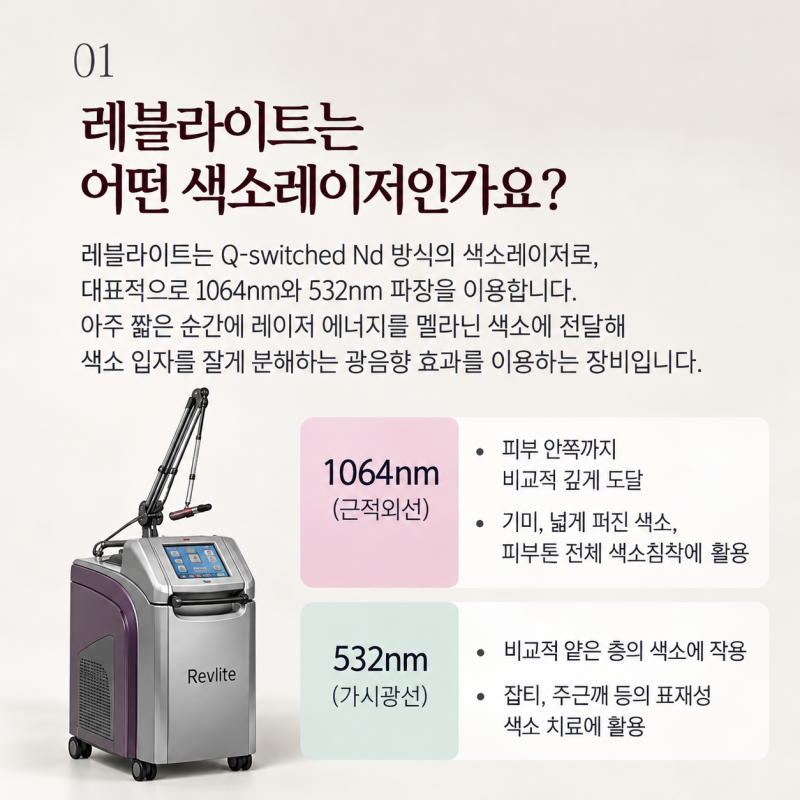
Revlight is a Q-switched Nd pigment laser that typically uses 1064 nm and 532 nm wavelengths.
It delivers laser energy to melanin in an extremely short burst, using a photoacoustic effect to break melanin particles into fine fragments.
Of these two wavelengths, 1064 nm can reach relatively deep into the skin, so it is mainly used for pigmentation that is spread widely, such as melasma, or for pigmentation that affects the overall skin tone.
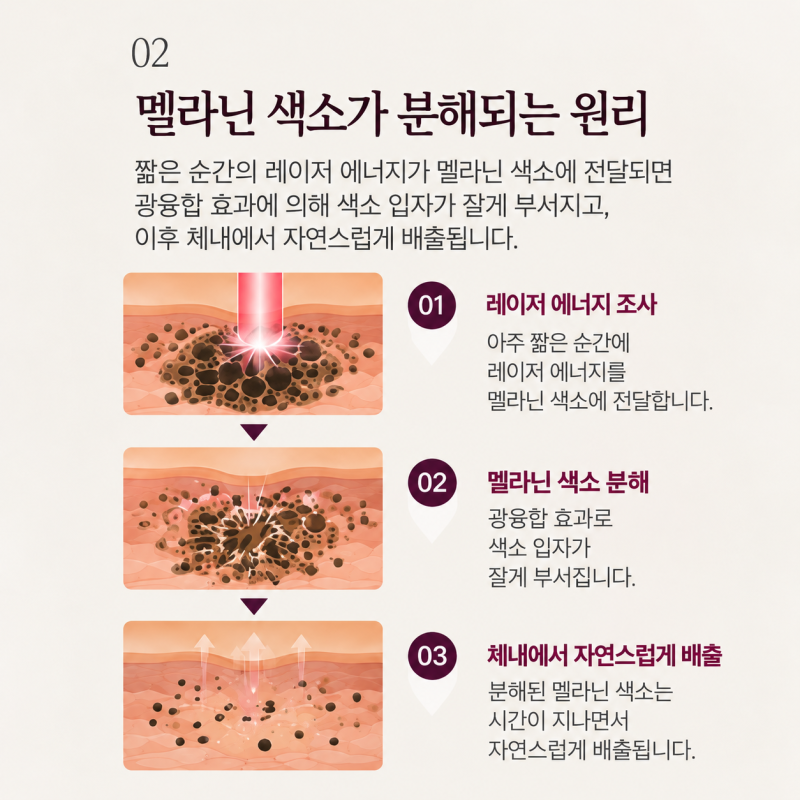
Rather than removing pigment all at once with high energy, it is often used to gradually reduce melanin by repeatedly delivering low energy over multiple sessions.
How is regular laser toning different from Revlight toning?
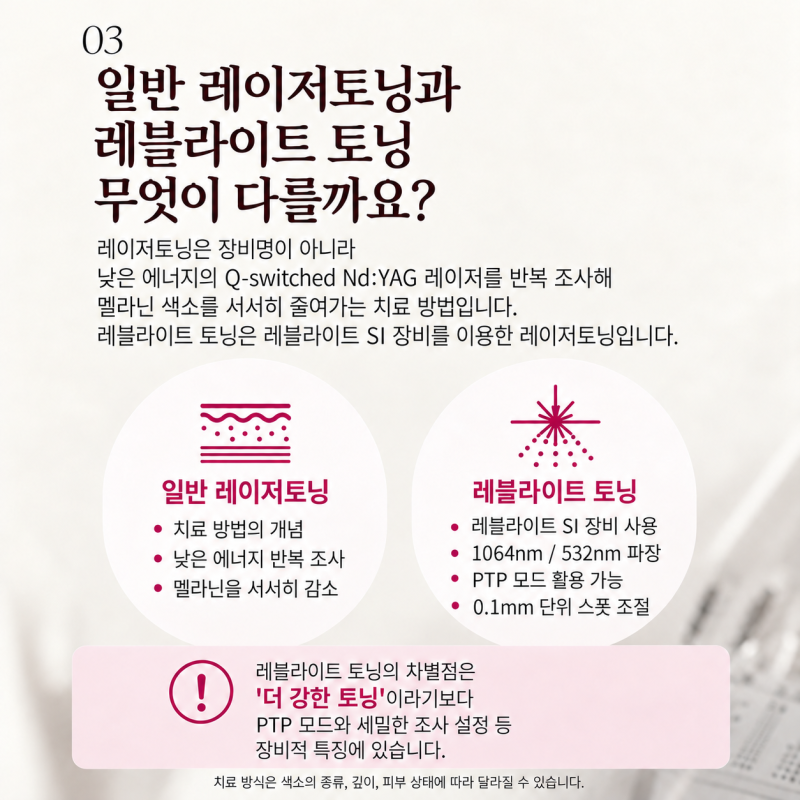
Strictly speaking, “laser toning” is not a device name but a treatment method.
Laser toning generally refers to gradually reducing melanin pigment by repeatedly applying a low-energy Q-switched Nd laser.
So Revlight toning can be understood as laser toning performed with the Revlight SI device.
So what's the difference?
The key features of Revlight SI lie in its energy delivery method and its fine-tuned treatment settings.
Revlight SI is a Q-switched Nd laser that uses 1064 nm and 532 nm wavelengths, and it can operate in PTP (PhotoAcoustic Technology Pulse) mode.
In PTP mode, instead of delivering laser energy in one go, the energy is split into two pulses delivered at a very short interval.
This energy-splitting approach is designed to deliver the energy needed for treatment while controlling the energy that would otherwise be concentrated instantaneously.
In addition, the SI handpiece lets you adjust the spot size in 0.1 mm increments, so treatment conditions can be set more precisely according to the size of the pigmented area and the skin's condition.
In short, the defining feature of Revlight toning is not simply that it is a “stronger” toning treatment. Rather, PTP mode and fine-tuned treatment settings allow the treatment to be tailored to each patient's skin condition.
Of course, the actual treatment approach and indications can vary depending on the type and depth of the pigment, skin tone, and skin sensitivity. That's why it's important to first assess your individual skin condition and then create an appropriate treatment plan.
Which pigments is Revlight toning commonly used for?
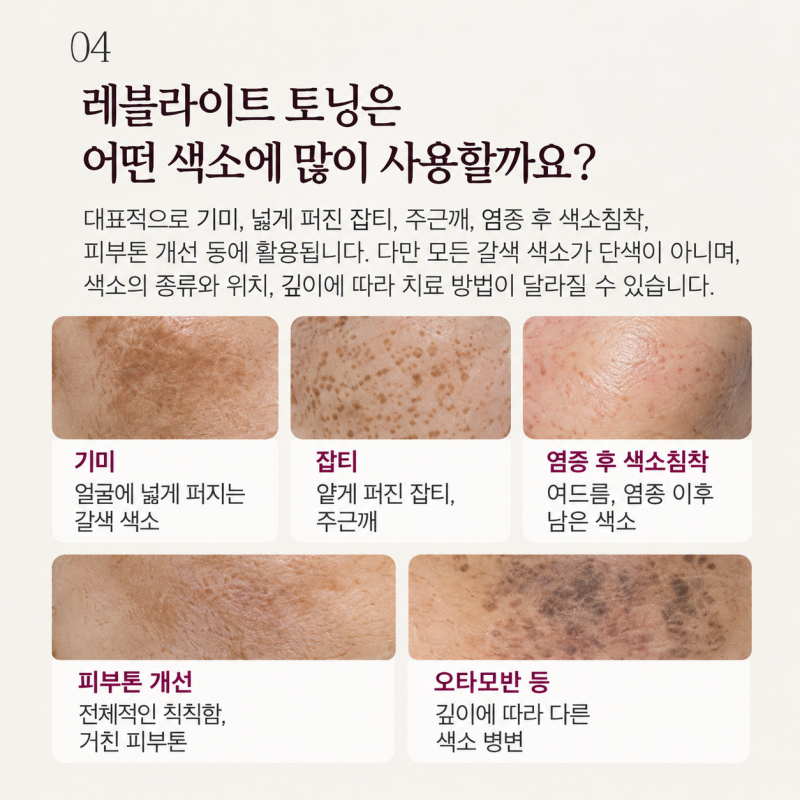
The most common application is melasma.
Melasma often appears as a broad pattern across the cheeks, cheekbones, and forehead, rather than as a distinct lesion where melanin is clustered in one spot.
Also, repeated strong irritation to the skin can actually make pigmentation darker. That's why it's important to rely on repeated treatments at low energy while carefully monitoring the skin's response, rather than using high energy.
Depending on skin condition, Revlight toning can also be used for post-acne or post-inflammatory pigmentation, faint freckles spread across the face, and overall dullness.
However, because the treatment approach can vary depending on the type, location, and depth of the pigment, the lesions need to be identified first so that the most suitable laser can be chosen.
How many sessions of Revlight toning will I need?
Revlight toning is usually planned as a series of repeat treatments rather than a one-time procedure.
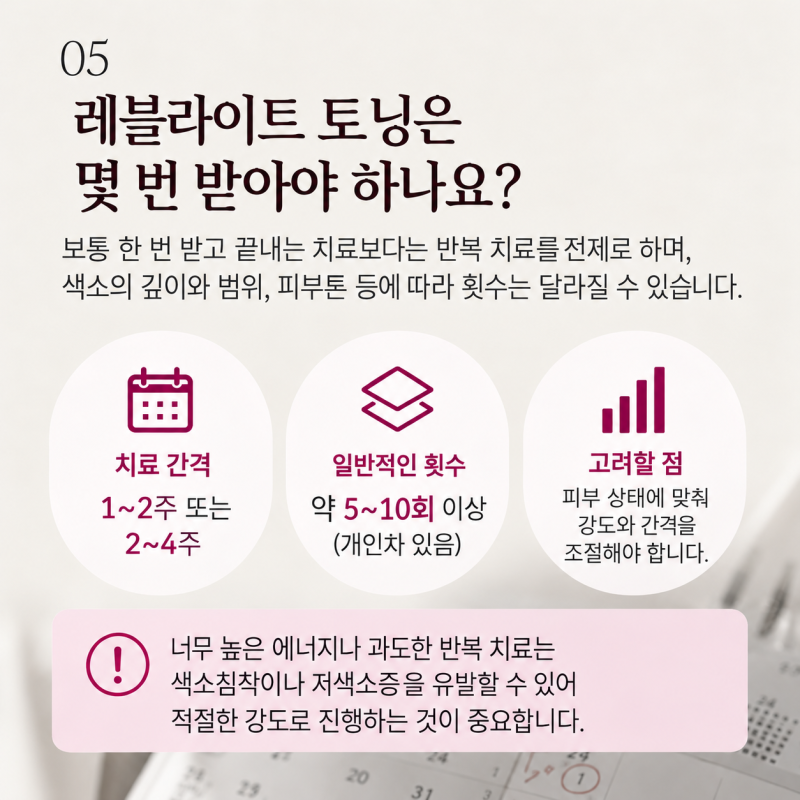
The number of sessions varies depending on the depth and extent of the pigment, skin tone, and whether you have had previous treatments. Generally, treatments are performed several times at set intervals while pigment changes are monitored.
Depending on skin condition, sessions are typically spaced 1–2 weeks or 2–4 weeks apart, and some cases require about 5 to 10 sessions or more.
That said, more sessions are not always better.
Excessively high energy or overly frequent repeat treatments can lead to hypopigmentation, a condition in which the skin becomes patchy and lighter. That's why intensity and intervals need to be adjusted to each person's skin.
What should I do for aftercare following Revlight toning?
Standard Revlight toning is not a laser that removes the surface layer of the skin, so it is relatively easy to fit into daily life.
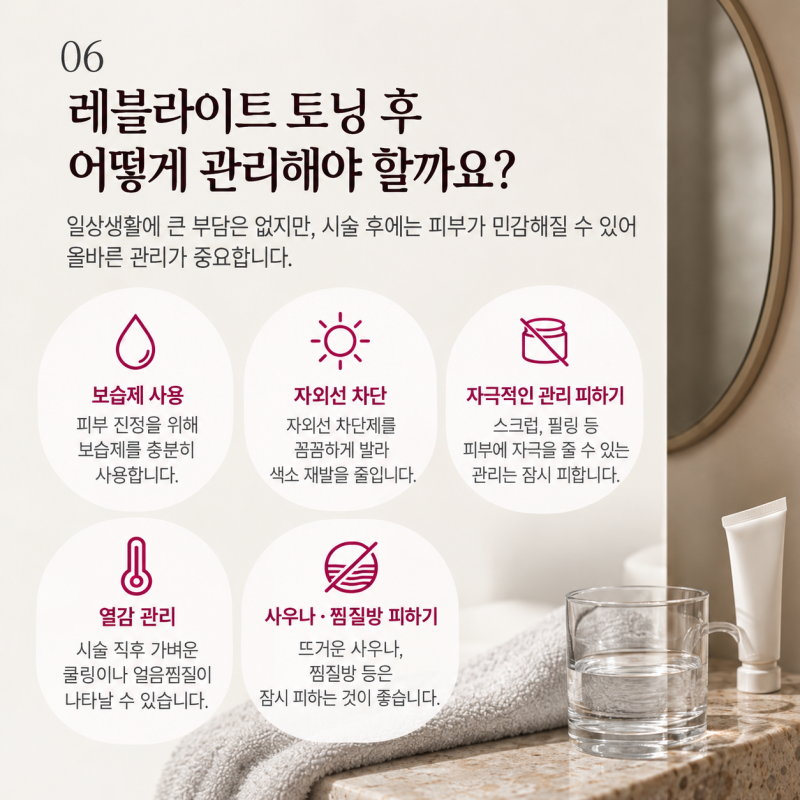
Right after treatment, you may notice mild redness or warmth, and your skin may feel more sensitive than usual.
After treatment, it's important to use plenty of moisturizer and apply sunscreen thoroughly.
Melasma is especially affected by UV exposure, so consistent sun protection is needed not only during the treatment period but also after treatment has ended.
Right after treatment, it's best to avoid scrubs, peels, and other care that may irritate the skin, as well as hot saunas and jjimjilbang (Korean heated bathhouses), for a short while.
So far, we've covered the principles and features of Revlight toning, the pigments it is used for, the treatment process, and post-treatment care.
If you've been considering Revlight toning, I hope this article has helped you understand the treatment a little better.
This was Dr. Lee Go-eun from Nine Clinic Hongdae.
Thank you for reading this long article.
“We wish for you to become more beautiful every single moment.”
Nine Clinic Hongdae
Lee Go-eun

Also, did you know we have a YouTube channel?
We share short, helpful information about a variety of procedures, so please stop by! 😊

Goeun Skin Lee Goeun Share videos with friends, family, and people around the world www.youtube.com
#HongdaeDermatology #HongdaePigmentTreatment #HongdaePigmentLaser #HongdaeMelasmaTreatment #HongdaeMelasmaLaser #Revlight #RevlightToning #LaserToning #PigmentLaser #PigmentTreatment #MelasmaTreatment #MelasmaLaser #MelasmaToning #FreckleLaser #FreckleTreatment #Hyperpigmentation #AcneHyperpigmentation #SkinToning #SkinToneImprovement #NineClinicHongdae
Frequently Asked Questions
How is Revlight toning different from regular laser toning?
Laser toning refers to a treatment method rather than a device name, and Revlight toning is laser toning performed with the Revlight SI device. The difference is not simply that it is a stronger toning treatment. Rather, PTP mode and fine-tuned treatment settings allow the treatment to be tailored to each patient's skin condition.
What pigments is Revlight toning mainly used for?
It is most commonly used for melasma. Melasma often spreads across the cheeks, cheekbones, and forehead rather than forming a distinct lesion in one area. Depending on skin condition, it can also be used for post-acne or post-inflammatory pigmentation, faint freckles spread across the face, and overall dullness.
How many sessions of Revlight toning do I usually need?
The number depends on the depth and extent of the pigment, skin tone, and prior treatments, and some cases require about 5 to 10 sessions or more. Treatments are usually spaced 1–2 weeks or 2–4 weeks apart depending on skin condition, and more sessions are not necessarily better. Excessive energy or overly frequent treatments can cause hypopigmentation, where the skin becomes patchy and lighter.
How does PTP mode deliver energy?
In PTP mode, instead of delivering laser energy all at once, the energy is split into two pulses delivered at a very short interval. This energy-splitting approach is designed to deliver the energy needed for treatment while controlling the energy that would otherwise be concentrated instantaneously.
How should I care for my skin after Revlight toning?
After treatment, it's important to use plenty of moisturizer and apply sunscreen thoroughly. Because melasma is strongly affected by UV exposure, consistent sun protection is needed even after treatment has ended. For a short while right after treatment, avoid scrubs, peels, and other irritating care, as well as hot saunas and jjimjilbang.