2026-09-19
Hongdae Dermatology Pigmentation Treatment: Why Combining Reepot and Ruby Laser Is Essential
Nine Clinic Hongdae explains why combining Reepot, Ruby, and Toning lasers is key to safely and effectively treating layered pigmentation and brightening dull skin.

Pigmentation treatment is
not simply a matter of "erasing color."
One of the most common remarks heard in the consultation room is,
"The spots have faded, but my overall skin tone still looks dull."
Even after removing visible blemishes or lentigines (age spots),
the skin tone may not become clear because
the various pigment layers remaining within the skin haven't been properly cleared.
This is why a single laser
has clear limitations in pigmentation treatment.
Hello.
This is Dr. Go-eun Lee from Nine Clinic Hongdae, near Hongik Univ. Station 🙂
Today, I would like to share an honest, professional perspective
on a topic that frequently comes up during consultations:
why combination therapy is so crucial in treating pigmentation.
Hongdae Dermatology: Why Doesn't Pigmentation Clear Up All at Once?
Many patients describe their concerns as
"just one melasma spot" or "just one blemish,"
but examining the skin closely reveals a very different story.
In most cases, various types of pigmentation
exist overlaid on top of one another:
✔ Lentigines (solar lentigo / sun spots)
✔ Seborrheic keratosis (age spots)
✔ Freckles
✔ Blemishes
✔ Late-onset dermal pigmentation
In other words, it is rare for someone to have only a single type of pigment;
most individuals have overlapping concerns.
Therefore, approaching pigmentation treatment
with only one laser
often leaves certain pigments behind or overstimulates other areas.
The Core of Pigmentation Treatment: Laser Selection and Combination
Different types of pigmentation
respond distinctly to different laser wavelengths.
Hence, rather than using a "one-size-fits-all" laser,
my standard approach is to assign specific roles to different lasers and combine them.
① Lentigines & Age Spots → Reepot Laser
Lentigines and seborrheic keratoses
typically have locally concentrated pigment
with relatively distinct borders.
For these lesions,
toning lasers alone have definite limitations,
whereas the Reepot laser, which specifically targets densely clustered pigment, is often highly effective.
✔ Prominently sized lentigines
✔ Thickly developed seborrheic keratoses
In these cases,
the treatment plan is centered around the Reepot laser.
(Actual clinical case treated at Nine Clinic; same individual.)

② Freckles & Blemishes → Ruby Laser
It delivers a uniform and
consistent beam down to the dermal layer
and boasts outstanding selectivity
for melanin pigment.
Its greatest strength is precisely treating targeted pigments
while minimizing irritation to surrounding tissue.
Consequently,
✔ Melasma, blemishes, freckles
✔ Nevus of Ota, ABNOM (acquired bilateral nevus of Ota-like macules)
✔ Skin brightening and whitening
For these conditions,
treatment utilizing the Ruby laser provides remarkable benefits.
(Actual clinical case treated at Nine Clinic; same individual.)
③ Overall Skin Tone & Late-Emerging Dermal Pigment
→ Toning Laser
Even after removing distinct lentigines or blemishes,
the skin may still appear dull,
or dermal pigment may resurface over time.
In such situations,
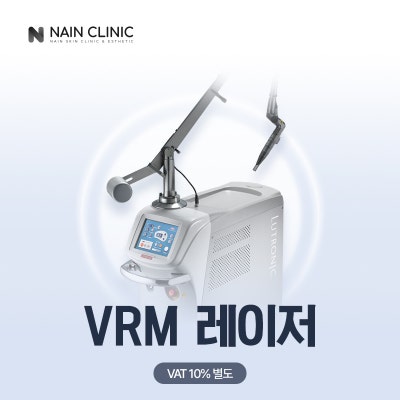
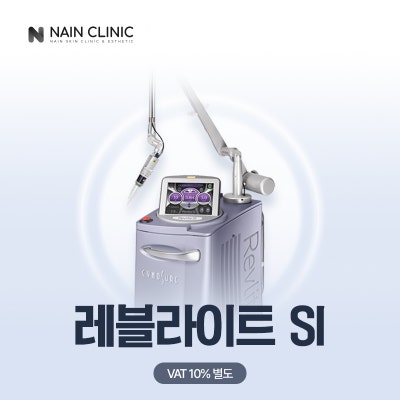
lasers such as VRM Toning or RevLite SI
are ideal for gently clearing residual pigments and refining
the overall skin tone with minimal irritation.
Toning lasers
do not try to obliterate pigment in a single aggressive pass;
instead, they stabilize the skin
while brightening and clarifying the overall complexion.
Why Combination Therapy Is Essential for Pigmentation
▸ Lentigines / Age Spots → Reepot Laser
▸ Freckles / Blemishes → Ruby Laser
▸ Overall Tone / Residual Pigment → Toning Laser
By dividing and combining lasers according to the nature of each pigment,
⭐ There is no need to apply excessively harsh energy with a single device,
⭐ Pigment clearance efficiency increases, and
⭐ Side effects such as post-inflammatory hyperpigmentation (PIH) and melasma flare-ups can be minimized.
Combination therapy
is not a harsher treatment—
it is a more precise and safer approach to clearing pigmentation.
As a natural result, clinical outcomes are significantly enhanced.
The Most Important Factor in Hongdae Pigmentation Treatment

In pigmentation treatment,
all of the following variables are crucial:
✔ Type of pigment
✔ Depth
✔ Distribution
✔ Skin type
Because every individual has a unique combination of these factors,
pigment treatment is inherently demanding and complex.
Therefore,
rather than asking, "Which laser is the absolute best?",
the key is determining which combination best suits your specific skin condition right now.
When designing a treatment plan, I prioritize three steps:
analyzing the nature of the pigment, anticipating the skin's response, and estimating recovery time.
In Conclusion
Pigmentation is not a condition
that naturally fades away with time.
However,
⭐ An appropriate combination of Reepot, Ruby, and toning lasers,
⭐ A targeted strategy tailored to each pigment type, and
⭐ An approach designed to minimize skin irritation
When these three elements align,
pigmentation treatment can yield stable, highly satisfying improvements.

If you are still troubled by dull, uneven skin
caused by stubborn spots,
it is time to look beyond single-laser options and focus on a comprehensive treatment strategy.
Thank you for reading🙂
"We want you to look and feel your most beautiful in every moment."
This has been Dr. Go-eun Lee
from Nine Clinic Hongdae.

Also,
did you know we have a YouTube channel?
We share concise, informative videos covering various aesthetic procedures,
so feel free to visit and subscribe 😊

Goeun Skin Go-eun Lee Share videos with friends, family, and the world www.youtube.com
#HongdaeDermatology #HongikUnivStationDermatology #HongdaeStationDermatology #HongdaeDermatologyClinic #PigmentationLaser #LentigoRemoval #ReepotLaser #RubyLaser #ToningLaser #HongdaeReepot #PigmentationTreatment #HongdaePigmentDermatology
Frequently Asked Questions
Why is it necessary to combine multiple lasers for pigmentation treatment?
A single laser cannot address all the diverse, overlapping pigment layers in the skin. Because conditions like lentigines, blemishes, freckles, and dermal pigmentation coexist, relying on one laser may leave certain pigments untouched or cause excessive irritation. Combining lasers matched to each pigment type allows for effective, targeted clearance.
Which laser is best suited for removing lentigines or seborrheic keratosis?
The Reepot laser is particularly effective for lentigines and seborrheic keratosis, as it specifically targets locally concentrated melanin. These lesions typically feature defined margins and thicker structures, limiting the efficacy of regular toning lasers. A customized treatment plan centered around the Reepot laser is recommended.
What pigmentation concerns does the Ruby laser primarily target?
The Ruby laser is primarily used for freckles, blemishes, melasma, and deep pigments like Nevus of Ota. It delivers a uniform beam to the dermis with high selectivity for melanin, allowing precise removal of targeted spots while minimizing thermal damage to the surrounding healthy tissue.
Why does my skin still look dull even after removing surface spots?
This often occurs because residual or deep dermal pigments haven't been fully cleared. Even if distinct surface blemishes disappear, overall tone can remain uneven. Gentle toning lasers, such as VRM Toning or RevLite SI, help refine deep residual pigment and brighten overall complexion without causing overt tissue stress.
Does laser combination therapy reduce the risk of hyperpigmentation?
Yes. Combining lasers tailored to specific pigment depths and types prevents the need to apply excessively high energy with any single device. This targeted approach lowers the risk of adverse reactions such as post-inflammatory hyperpigmentation (PIH) or aggravated melasma, making the procedure safer and more controlled.